
1. Introduction
Imagine trying to sketch a perfect 3D map of a massive, swirling stadium crowd while you are trapped sitting right in the middle of the bleachers. That is exactly the puzzle astronomers faced when trying to map our home galaxy, the Milky Way, from inside Earth’s atmospheric distortion.
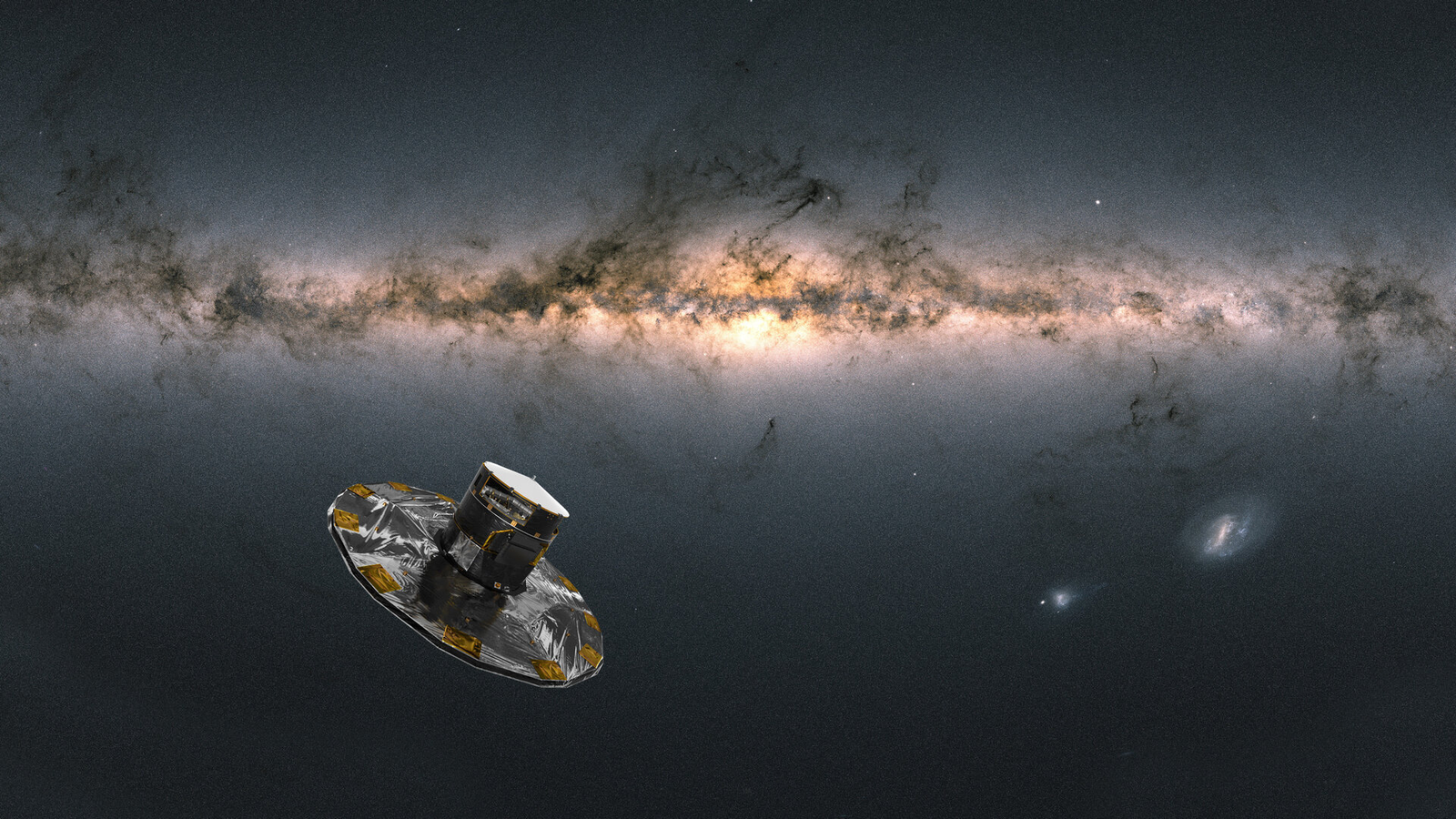
Then came Gaia. Launched by the European Space Agency (ESA), this revolutionary space observatory spent over a decade quietly changing everything we know about our cosmic backyard, transforming how we visualize the structure of the universe.
The best Milky Way animation, by Gaia
2. The Mission by the Numbers
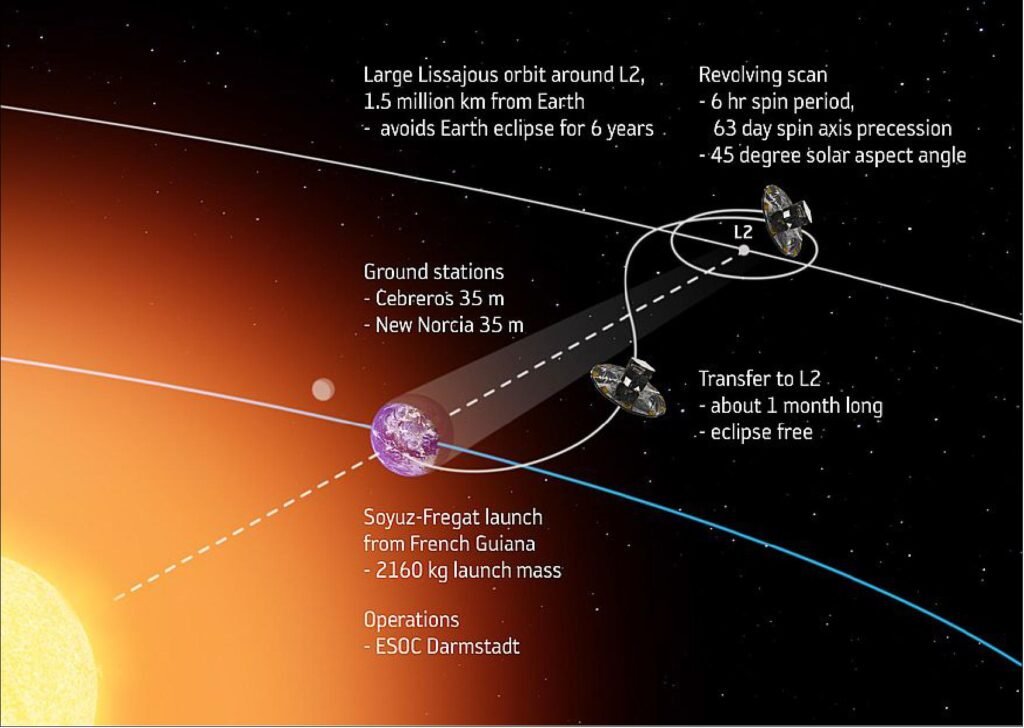
Operating 1.5 million kilometres away from Earth at the Lagrange Point 2 (L2), Gaia bypassed the physical limitations of ground-based telescopes to function as an ultra-precise cosmic census taker.
2 Billion+ Objects Tracked: Built the most complete 3D atlas of stars along with planetary asteroids and ancient quasars.
938 Million Pixels: Formed of a massive focal plane array, utilizing one of the largest digital cameras ever flown in space to achieve pin-sharp resolution.
3.2 Trillion Measurements: Tracked stellar positions, variations in brightness, and radial velocities over its historic operational lifetime.
To achieve this, Gaia utilized a geometric technique called parallax—measuring how stars seem to shift slightly against a stable background when viewed from opposite sides of Earth’s orbit around the sun. This precision is equivalent to measuring the width of a single human hair from thousands of miles away.
3. Deep Inside the Stellar Nurseries
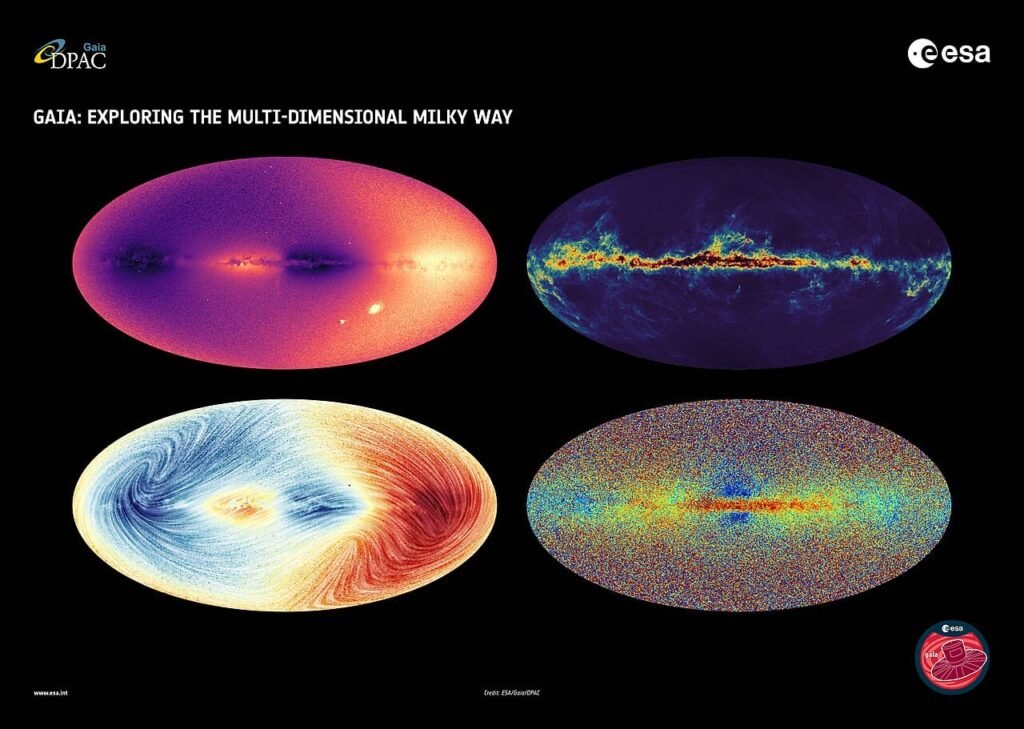
Four maps of the Milky Way galaxy: radial velocity (top left), proper motion (bottom left); interstellar dust (top right); and metallicity (bottom right)
By layering these four distinct mapping profiles together, Gaia serves as a galactic time machine. By tracking stellar velocities backward through time, scientists discovered that the Milky Way is a survivor; roughly 10 billion years ago, our galaxy collided with and swallowed a smaller companion galaxy dubbed Gaia-Enceladus.
4. A Glimpse Through Gaia’s Eyes
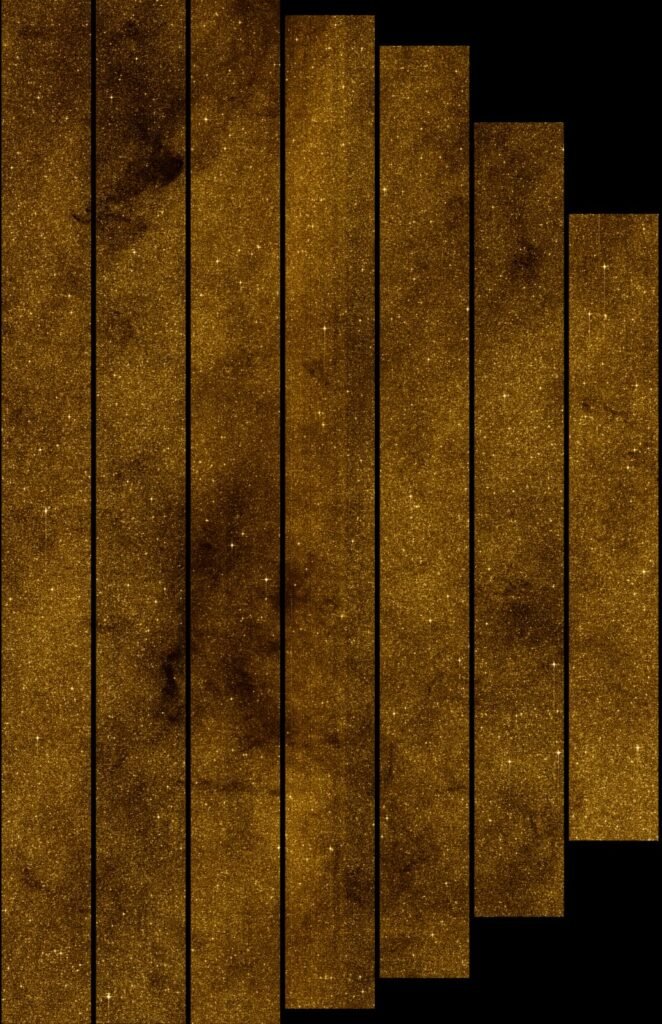
This explicit window covers just 0.6 square degrees of the sky. Yet, due to the extreme sensitivity of the instruments, an incredible 2.8 million stars are captured in this single sequence. The data appears in distinct parallel strips, with each strip corresponding directly to a sky mapper CCD sensor on Gaia’s main focal plane array.
5. The Story is Far From Over
While the spacecraft officially retired after completing its planned mission phases in 2025, the scientific revolution is actually accelerating. Processing a decade’s worth of raw telemetry into clean, public global catalogs takes years of intensive work.
The international astronomical community is waiting expectantly as ESA prepares for Gaia Data Release 4 (DR4), which is expected around 2026. This upcoming release will unleash hundreds of terabytes of fresh, ultra-precise data, allowing researchers to track hidden exoplanets, trace dark matter structures, and update our structural models of space all over again.
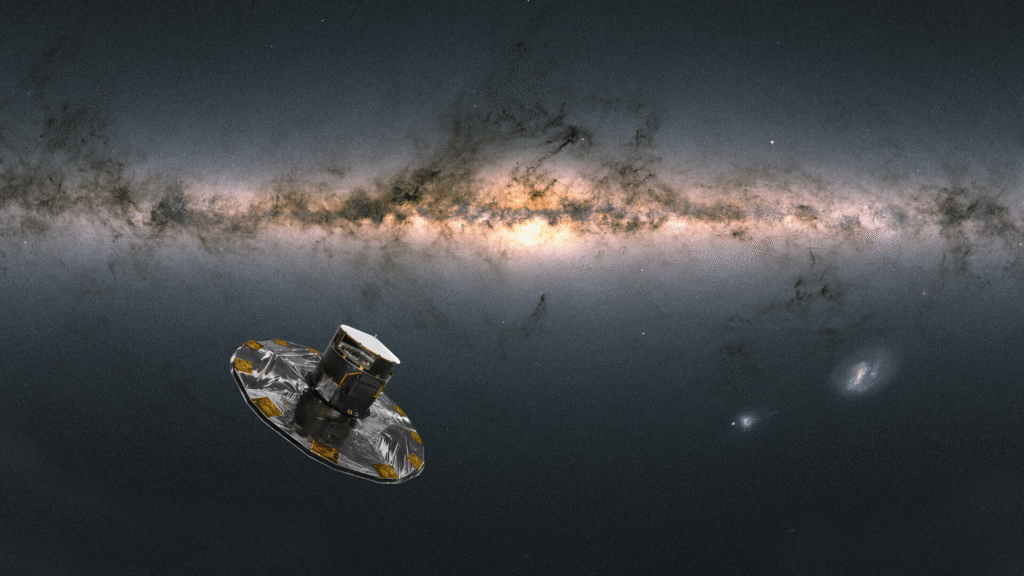
Gaia's decade of discoveries unravelling the intricacies of our galaxyThe Takeaway:
The spacecraft has finished its final scans and turned off its instruments, but Gaia’s database will remain the ultimate foundation guiding the next generation of space engineers and scientists deep into the 21st century.