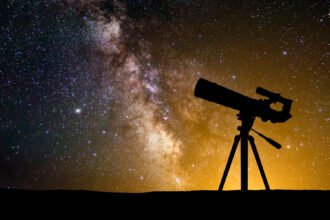

“Every time we look up at the night sky, we are actually looking into the past.”
Have you ever wished you could travel back in time and witness how the universe was born? While humans cannot physically travel through time, astronomy offers something remarkably close. By observing light that has taken millions or even billions of years to reach Earth, astronomers can study the universe as it existed in the distant past. This is why telescopes are often called “cosmic time machines.” One of the most advanced observatories built for this purpose is the Vera C. Rubin Observatory, a revolutionary facility designed to transform our understanding of the cosmos.
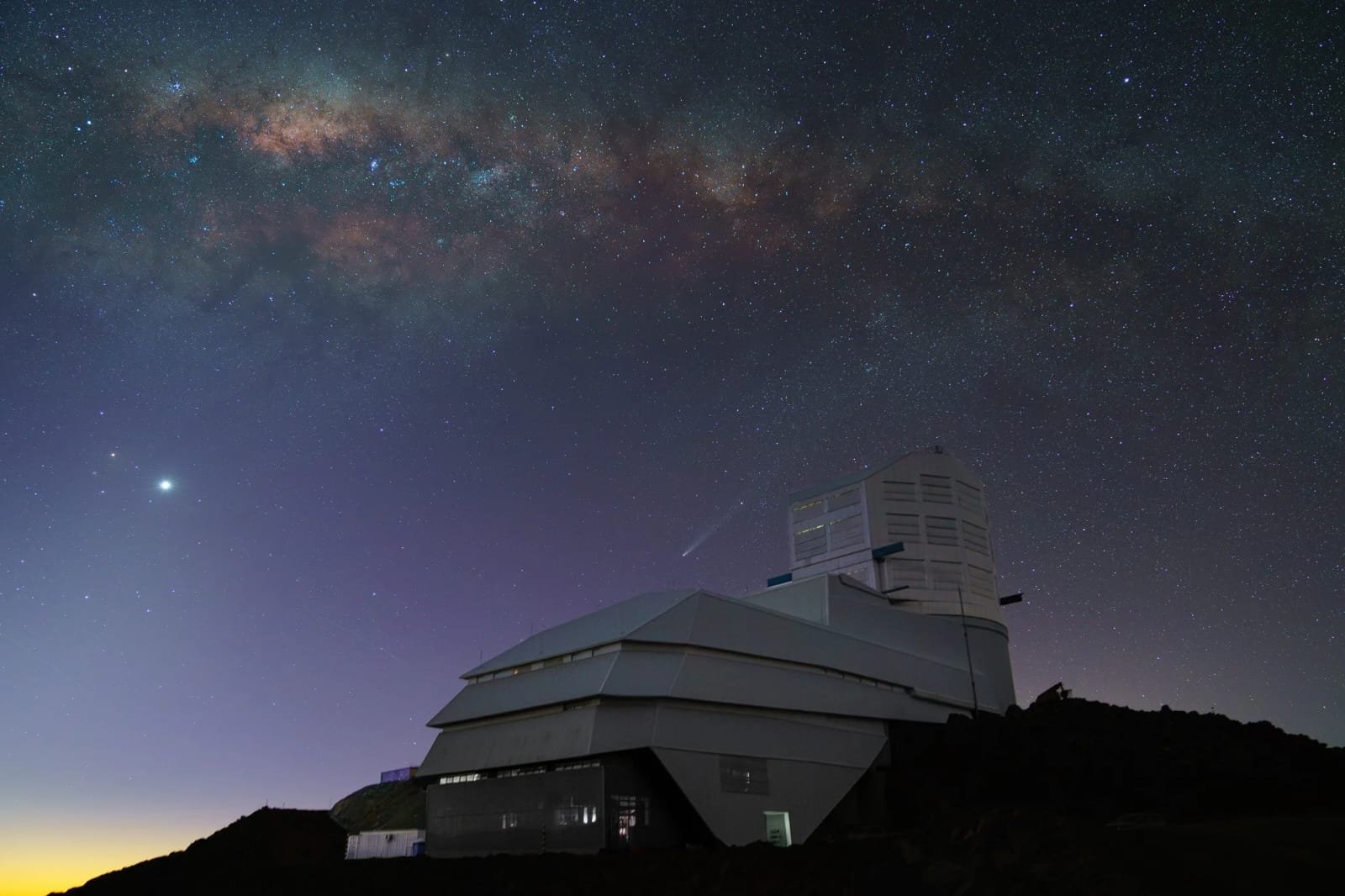
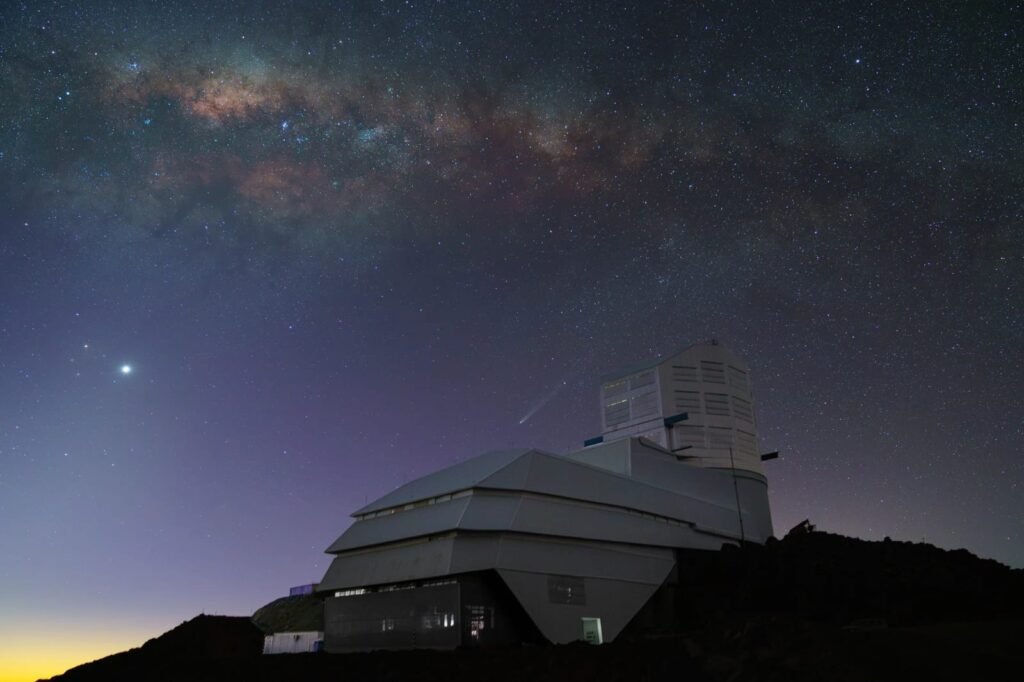
Located on Cerro Pachón in Chile, the Vera C. Rubin Observatory combines cutting-edge engineering, an enormous digital camera, and a powerful telescope to conduct an unprecedented survey of the night sky. Over the next decade, it is expected to reveal countless new celestial objects, map billions of galaxies, and provide insights into some of the universe’s greatest mysteries.
WHY IS IT CALLED A COSMIC TIME MACHINE?
Light travels at a finite speed of approximately 300,000 kilometers per second. This means that when we observe distant stars and galaxies, we are not seeing them as they are today-we are seeing them as they were when their light first began its journey toward Earth.
For example:
- The light from the Sun takes about 8 minutes to reach earth.
- Light from the Andromeda Galaxy takes about 2.5 million years.
- Some galaxies observed by powerful telescopes emitted their light over 10 billion years ago
Therefore, every astronomical observation is essentially a glimpse into the past. By studying these ancient signals, scientists can reconstruct the history and evolution of the universe.
WHAT IS THE VERA C. RUBIN OBSERVATORY?
The Vera C. Rubin Observatory is one of the world’s most ambitious astronomical projects. It is named after Dr. Vera Rubin, the pioneering astronomer whose research provided compelling evidence for the existence of dark matter.
The observatory features:
- An 8.4-meter Simonyi Survey Telescope
- The largest digital camera ever built for astronomy, with an astonishing 3.2-gigapixel resolution
- A field of view large enough to capture an area of the sky equivalent to 40 full moons in a single image
Unlike traditional telescopes that focus on individual objects, the Rubin Observatory is designed to repeatedly scan the entire southern sky, creating a dynamic record of how the universe changes over time.
THE LEGACY SURVEY OF SPACE AND TIME (LSST)
The observatory’s primary mission is the Legacy Survey of Space and Time (LSST), a ten-year project that will continuously observe the night sky.
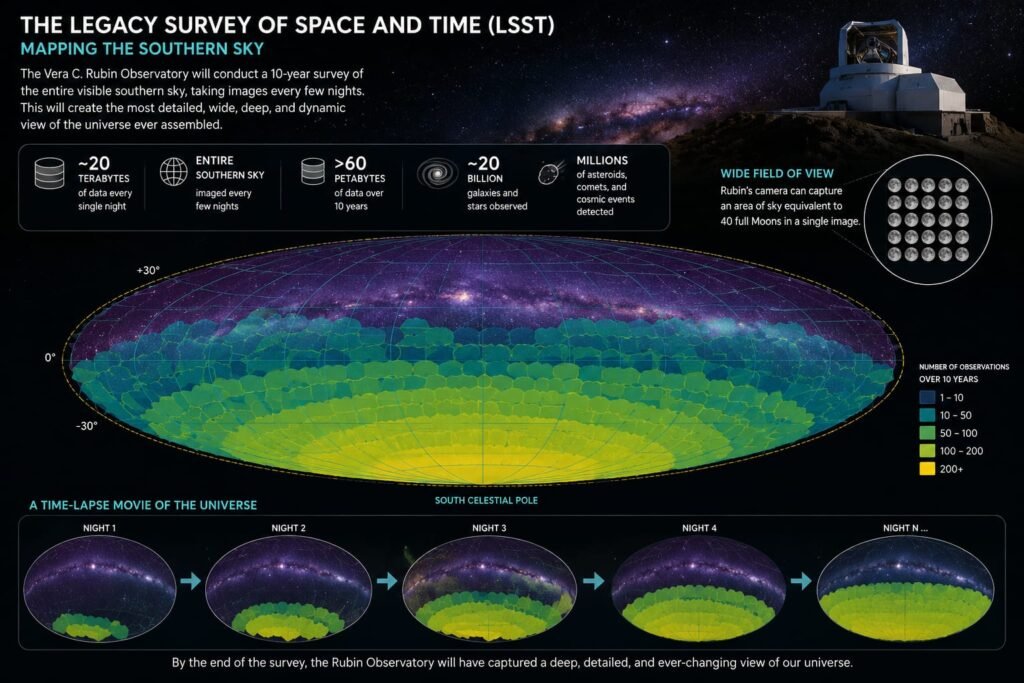
During this survey, the observatory will:
- Capture approximately 20 terabytes of data every night
- Photograph the entire visible southern sky every few nights
- Produce over 60 petabytes of scientific data during the project
- Observe nearly 20 billion galaxies and stars
- Detect millions of asteroids, comets, and transient cosmic events
This enormous dataset will become one of the most valuable astronomical resources ever created.
UNLOCKING THE MYSTERIES OF THE UNIVERSE
The Vera Rubin Observatory will help scientists investigate several of astronomy’s biggest unanswered questions.
1. Dark Matter and Dark Energy
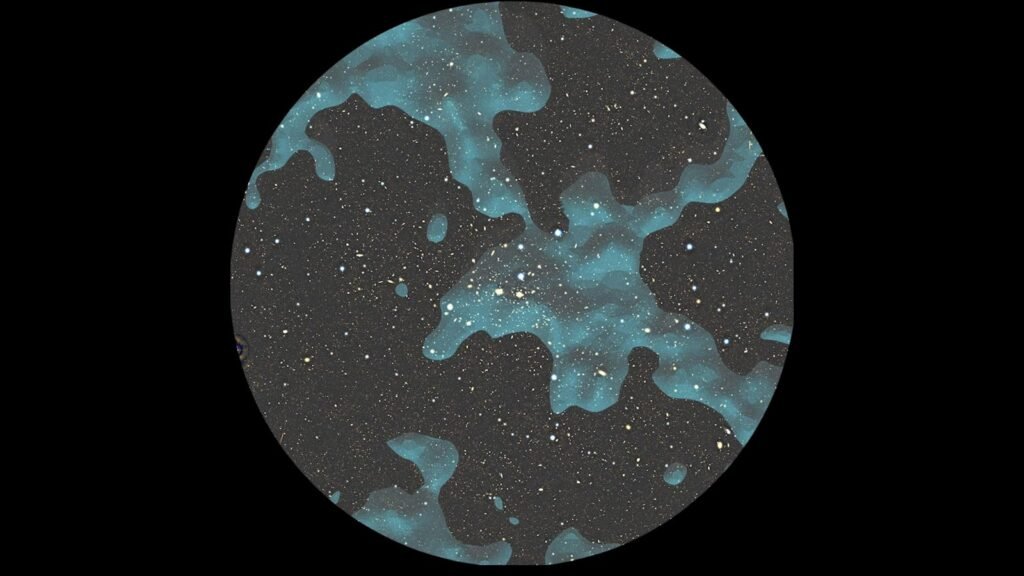
Only about 5% of the universe consists of ordinary matter. The remaining 95% is believed to be made up of dark matter and dark energy, which remain largely mysterious. Rubin’s detailed sky maps will help scientists better understand how these invisible components influence the structure and expansion of the universe.
2. Discovering New Solar System Objects
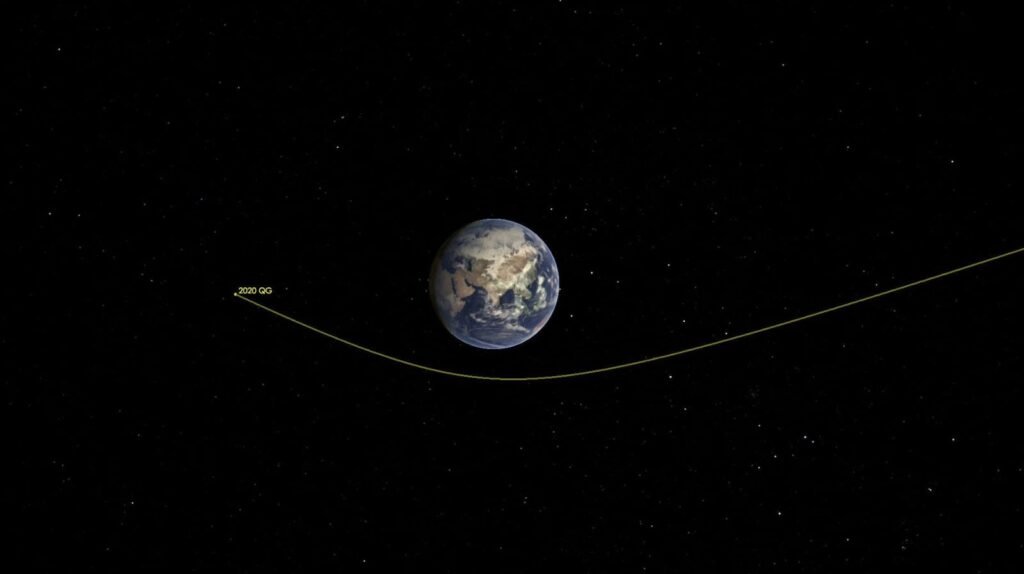
The observatory will identify millions of asteroids and thousands of previously unknown comets. It will also improve our ability to detect Near-Earth Objects (NEOs) that could potentially pose impact risks.
3. Observing Explosive Cosmic Events
Rubin will continuously monitor the sky for:
- Supernova explosions
- Gamma-ray burst afterglows
- Variable stars
- Black hole activity
- Gravitational lensing event
Many of these phenomena change rapidly, making continuous observations essential.
4. Mapping the Milky Way
The observatory will produce one of the most detailed maps ever created of our own galaxy, helping astronomers better understand its structure, history, and evolution.
ARTIFICIAL INTELLIGENCE AND BIG DATA IN ASTRONOMY
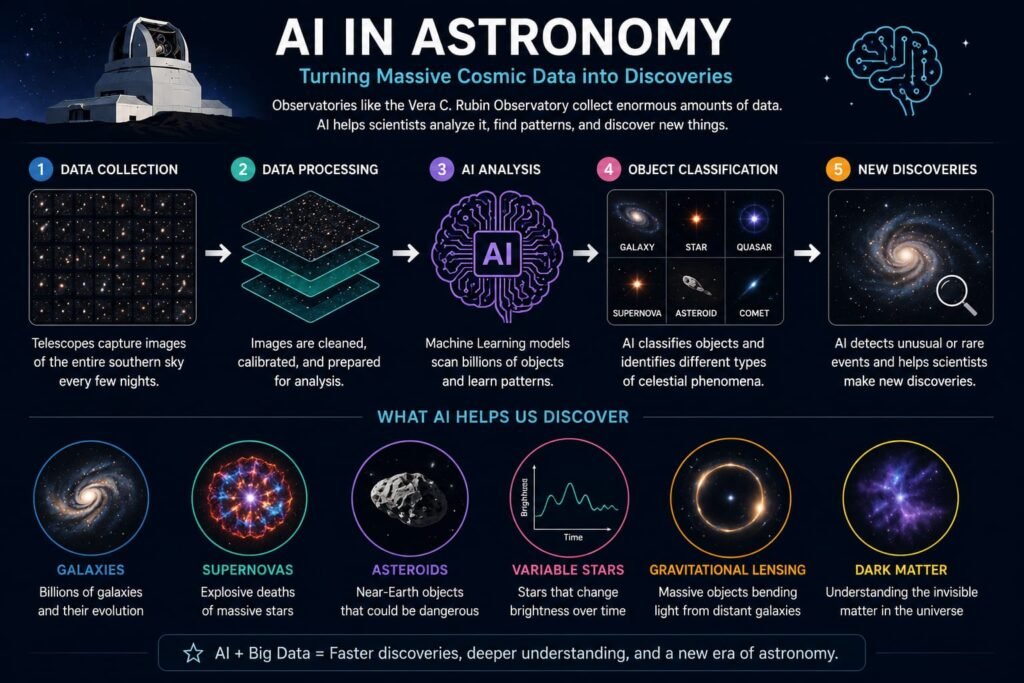
he Vera Rubin Observatory represents a new era of data-driven astronomy. Since it generates enormous amounts of information every night, astronomers rely on:
- Artificial Intelligence (AI)
- Machine Learning
- Cloud Computing
- Advanced Data Analytics
These technologies automatically identify unusual events, classify celestial objects, and alert scientists worldwide within minutes whenever something extraordinary occurs.
WHY THIS OBSERVATORY MATTERS
The Vera Rubin Observatory is far more than just another telescope. It is a powerful scientific instrument that will fundamentally change how we study the dynamic universe. By repeatedly imaging the sky over ten years, it will create an unprecedented “time-lapse movie” of the cosmos.
Its discoveries may include:
- Previously unknown galaxies
- Rare cosmic explosions
- Hidden populations of asteroids
- Better measurements of dark matter
- Clues about the evolution of the universe itself
Many astronomers believe the Rubin Observatory will make discoveries that cannot yet even be predicted.
CONCLUSION
The Vera C. Rubin Observatory truly deserves the title “The Cosmic Time Machine.” Every image it captures allows humanity to look billions of years into the past, revealing how stars, galaxies, and the universe have evolved over cosmic history. With its groundbreaking technology, massive data collection, and innovative scientific mission, the observatory will help answer some of astronomy’s greatest questions while undoubtedly uncovering entirely new mysteries.
As the Rubin Observatory begins its survey of the southern sky, it promises to inspire a new generation of scientists and space enthusiasts, reminding us that by looking deeper into space, we are also looking further back in time.
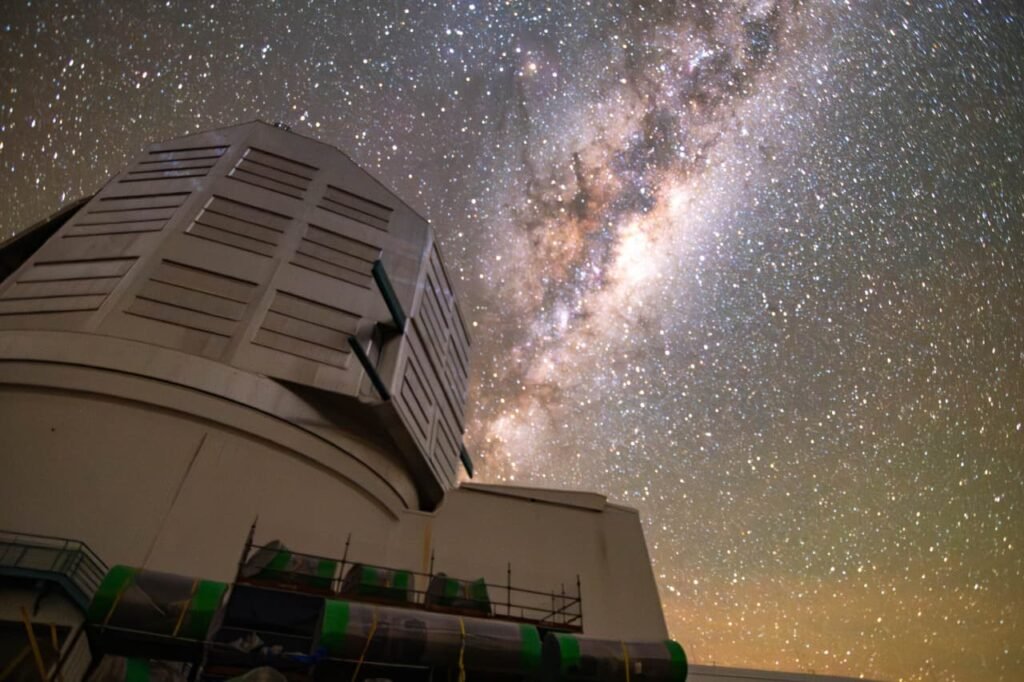
The Cosmic Time Machine: looking deeper into space, and further back into time
“The better we understand the past, the better we can explore the future. By reading the universe’s history, the Vera C. Rubin Observatory is opening the door to tomorrow’s discoveries.”