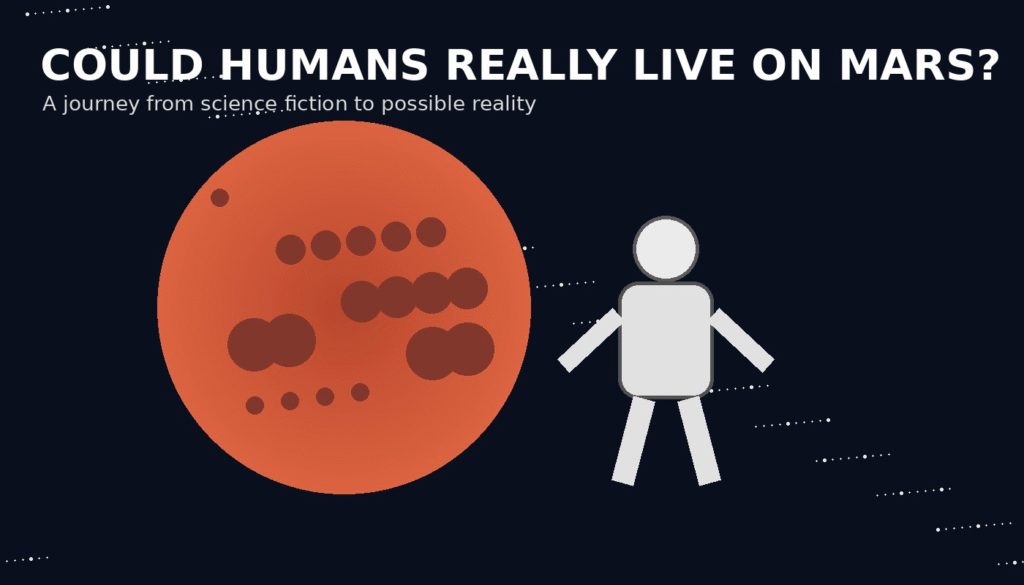
Could Human Really Live on Mars?
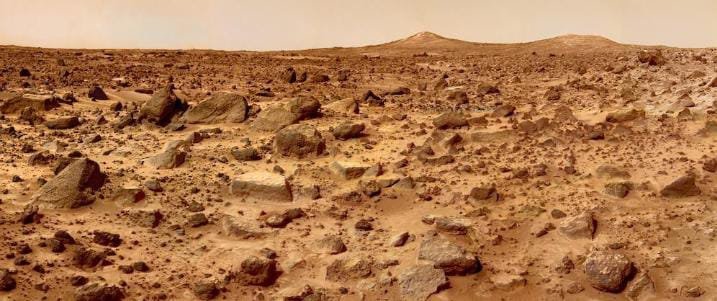
Imagine waking up in the morning and looking through a window at a red, dusty landscape instead
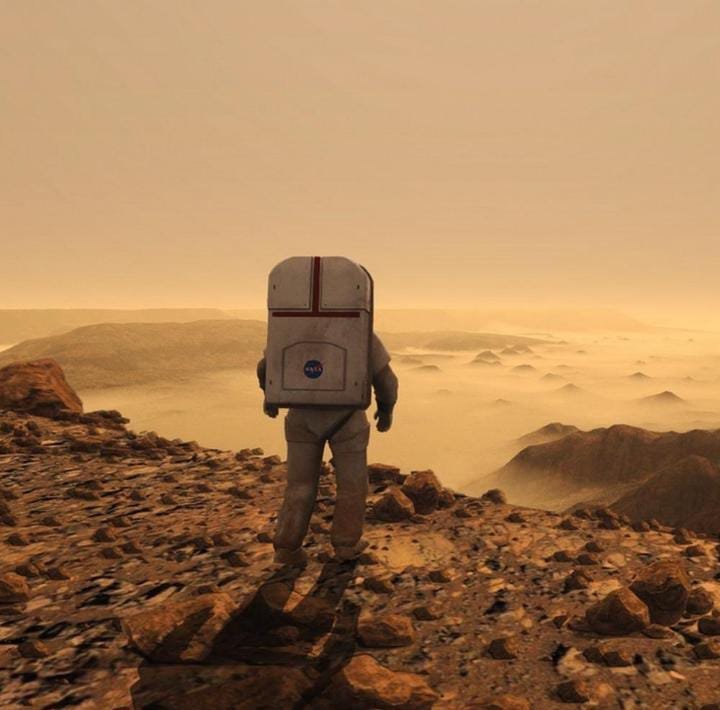
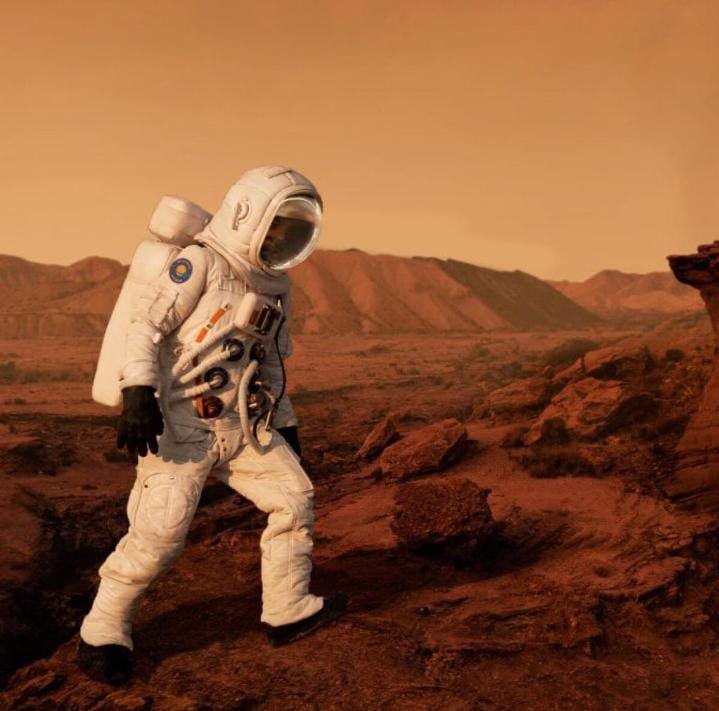
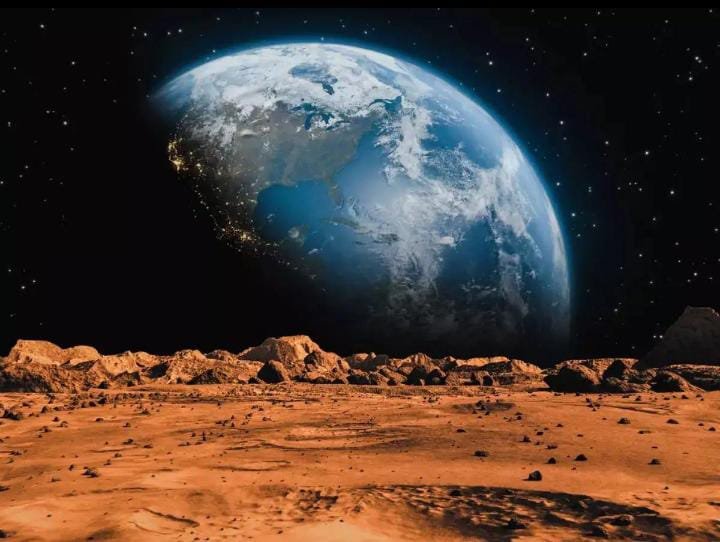
of the blue skies of Earth. Imagine walking outside wearing a spacesuit, seeing two tiny moons in the
sky, and knowing that Earth is millions of kilometres away. This may sound like science fiction, but
scientists are seriously studying whether humans could one day live on Mars.
Mars, often called the Red Planet, is the fourth planet from the Sun. It has seasons, mountains,
valleys, polar ice caps and a day that lasts about 24.6 Earth hours. Yet Mars is extremely cold, dry
and hostile. Humans could not survive there without technology and artificial protection.
Why Mars ?
Mars is one of the most interesting destinations for future human exploration. Evidence from
spacecraft shows that ancient Mars once had rivers, lakes and other environments where liquid water existed. Its past makes scientists interested not only in human exploration, but also in the
search for clues about whether life may once have existed there.
The Biggest Problem : Mars is Extremely Hostile
Mars has a very thin atmosphere made mostly of carbon dioxide. It does not contain enough oxygen
for humans to breathe, and its surface pressure is less than one percent of Earth’s average surface
pressure. Temperatures can vary greatly, and the planet can become extremely cold. An astronaut
would therefore need a spacesuit or a pressurized habitat at all times.
Where Would We Get Oxygen?
Oxygen would be one of the most important resources on Mars. NASA’s MOXIE experiment
demonstrated that oxygen can be produced from carbon dioxide in the Martian atmosphere. A
future settlement could use similar technology to produce oxygen locally rather than transporting
every kilogram from Earth.
What About Water?
Water is essential for life, and Mars does contain water, mainly as ice. Future astronauts could
potentially extract water from underground ice or other Martian resources. That water could be
used for drinking, growing plants, producing oxygen, hygiene and making fuel. A successful
settlement would need to recycle water very efficiently.
How Would People Get Food?
A permanent settlement could not depend entirely on food shipped from Earth. Astronauts would
need controlled growing systems such as greenhouses. Plants would have to be grown with carefully
managed light, temperature, pressure, nutrients and water. Producing food locally would make
long-term missions more practical.
Where Would Humans Live?
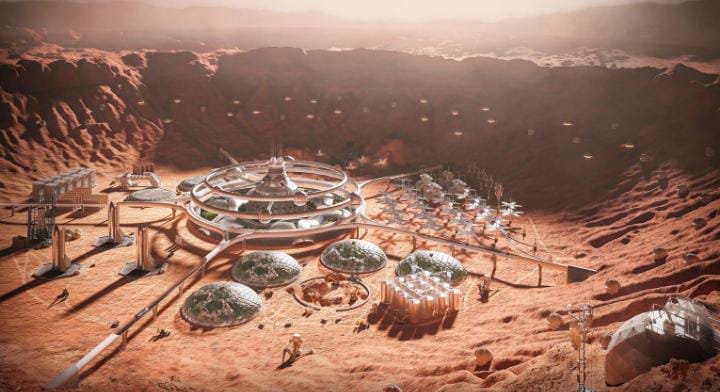
Humans could not live in ordinary houses on the Martian surface. They would need pressurized
habitats with oxygen, temperature control, water recycling, energy systems and radiation
protection. Habitats culd be built partly underground or covered with Martian soil to provide
additional shielding.
Radiation : An invisible Danger
Radiation is one of the most serious hazards of living beyond Earth. Our planet is protected by a
thick atmosphere and a global magnetic field, while Mars has a very thin atmosphere and no global magnetic field today. Future habitats may therefore require thick shielding, underground rooms or other protective systems.
Getting to Mars is Another Challenge
Mars is far from Earth, and the distance between the planets changes as they orbit the Sun. A
crewed mission would require months of travel and reliable life-support systems. Astronauts would
face radiation, isolation, limited living space, communication delays and the physical effects of longduration
spaceflight.
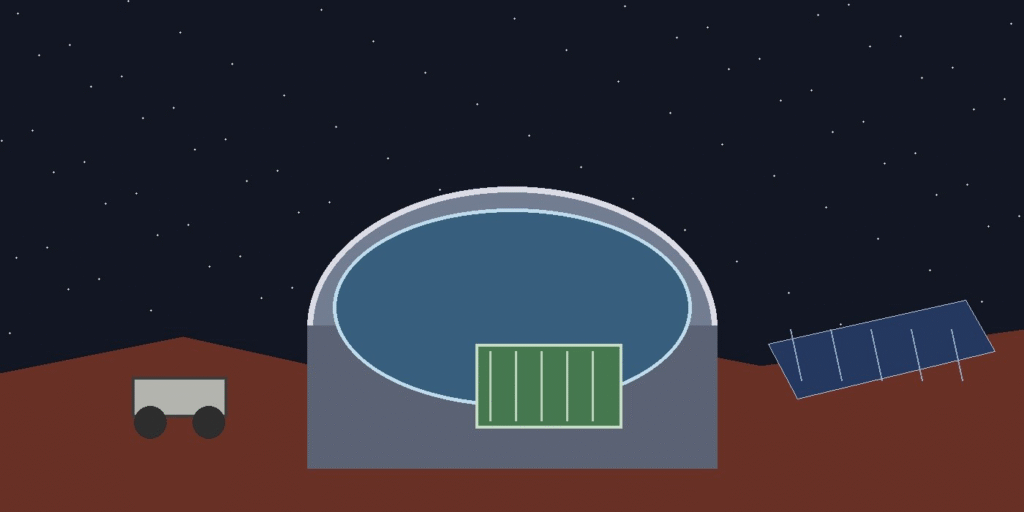
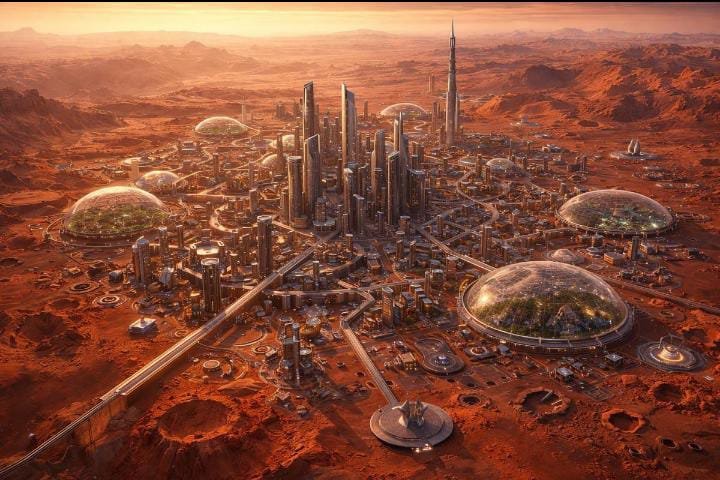
Could Humans Actually Build a Mars City ?
A small research base is much more realistic than a huge city in the near future. The first human
missions would likely focus on science, technology testing and learning how to use local resources.
| Stage | What it could mean |
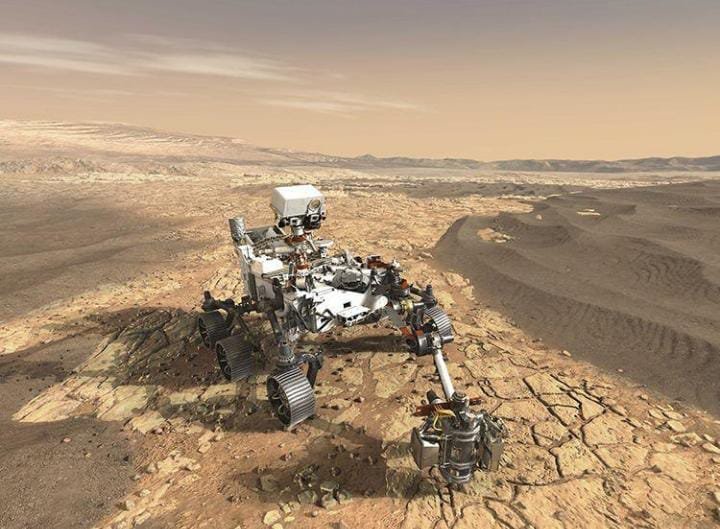
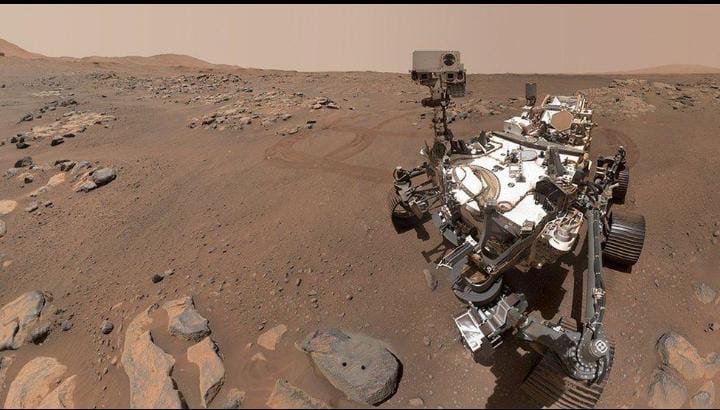
| 1.Robotic Exploration | Robots map the surface , study the environment and search for useful resources. |
| 2.First Human Mission | A small crew travels to Mars and operates a carefully protected habitat. |
| 3.Permanent Research Base | Habitats, laboratories, power systems and local resource technologies expand. |
| 4.Larger Settlement | More people arrive, food production and local manufacturing grow. |
| 5.Martian Community? | A much larger, partly self-sufficient community could become possible in the distant future. |
Would Mars Ever Become a Second Earth ?
Transforming Mars into an Earth-like world is called terraforming. Science fiction often imagines
oceans, forests and a breathable atmosphere on Mars. However, changing an entire planet would be
an enormous challenge. For the foreseeable future, humans are more likely to create small artificial
environments that are safe inside an otherwise hostile planet.
Why Are Scientists Still Interested ?
Mars could provide clues about planetary evolution, ancient climate and the possibility of life
beyond Earth. Human exploration could also push advances in recycling, robotics, agriculture,
energy, materials and life-support systems. Many of these technologies could eventually be useful on
Earth as well.
A Future Beyond Earth
Perhaps the most exciting part of Mars exploration is not simply moving to another planet. It is
learning whether humans can maintain a permanent presence beyond Earth. Earth will remain our
natural home, while Mars would be a difficult artificial environment where survival depends on
technology, teamwork and careful planning.
So, Could Human Really Live on Mars ?
Yes-humans may eventually be able to live on Mars, but not in the same way we live on Earth today.
We would need pressurized habitats, reliable oxygen systems, water recycling, food-production
systems, radiation protection and powerful energy sources. Transport, communication, health and
psychological challenges would also have to be solved.
The first humans on Mars may not stay forever. They may stay for months or years, conduct
experiments and return to Earth. But if technology continues to advance, a small settlement could
one day become possible.
“The question is no longer simply ‘Can humans reach Mars?’ The bigger question is: ‘ Can we learn to call another planet home?’
Quick Facts About Mars ?
| Planet position | 4th planet from the sun |
| Length of a day | About 24.6 Earth hours |
| Atmosphere | Mostly carbon dioxide |
| Surface environment | Cold, dry and dusty |
| Water | Large amounts exist as ice |
| Main Human challenge | Keeping people alive in a thin,cold,radiation-exposed environment |
Sources for Further Reading
- NASA Science – Mars Facts
- NASA – Humans to Mars
- NASA – MOXIE oxygen – production experiment
- NASA – Space Radiation